Orthopaedic Care
Orthopaedic Doctor in Okara: Expert Bone, Joint & Spine Care
Knee pain, back pain, fractures or a stiff shoulder? Find out when to see an orthopaedic doctor in Okara, what treatment involves, and how to choose the right specialist.
Medically reviewed by Dr. Muhammad Faizan Tahir, MBBS, MS Orthopaedic Surgery, MSc Pain Medicine, Consultant Orthopaedic & Spine Surgeon. This guide is for general education and does not replace an in-person examination.
What Does an Orthopaedic Doctor Do?
An orthopaedic doctor (also called an orthopaedic surgeon, bone doctor or bone and joint specialist) diagnoses and treats problems of the musculoskeletal system. That means bones, joints, ligaments, tendons, muscles and the spine.
The name sounds surgical, but most patients never need an operation. A good orthopaedic specialist in Okara first tries medicines, exercise, injections and lifestyle changes. Surgery is planned only when these do not work or when the injury demands it.
Orthopaedic doctor vs. general physician
A general physician can treat a mild sprain or short-term backache. An orthopaedic surgeon is trained to read X-rays and MRI scans, examine joints in detail, perform injections under guidance and operate when required. If pain lasts more than a couple of weeks, a specialist opinion saves time and prevents damage.
When Should You See an Orthopaedic Doctor in Okara?
Do not wait for pain to become unbearable. See a specialist if you notice any of these signs:
- Joint pain or swelling lasting more than two weeks
- Pain while walking, climbing stairs or getting up from a chair
- Morning stiffness, or grinding and cracking sounds in the knee
- Back pain that spreads down the leg (sciatica) or causes tingling
- Numbness in the hand at night, especially the thumb, index and middle fingers
- Difficulty lifting the arm or combing hair
- A fall, road accident or sports injury with swelling, deformity or inability to bear weight
Common Bone, Joint & Spine Conditions Treated
Bone and joint problems are very common worldwide. The World Health Organization estimates that about 528 million people lived with osteoarthritis in 2019, and about 619 million with low back pain in 2020. Locally, long hours of sitting, weight gain, diabetes and untreated injuries add to the burden.
Knee pain & arthritis
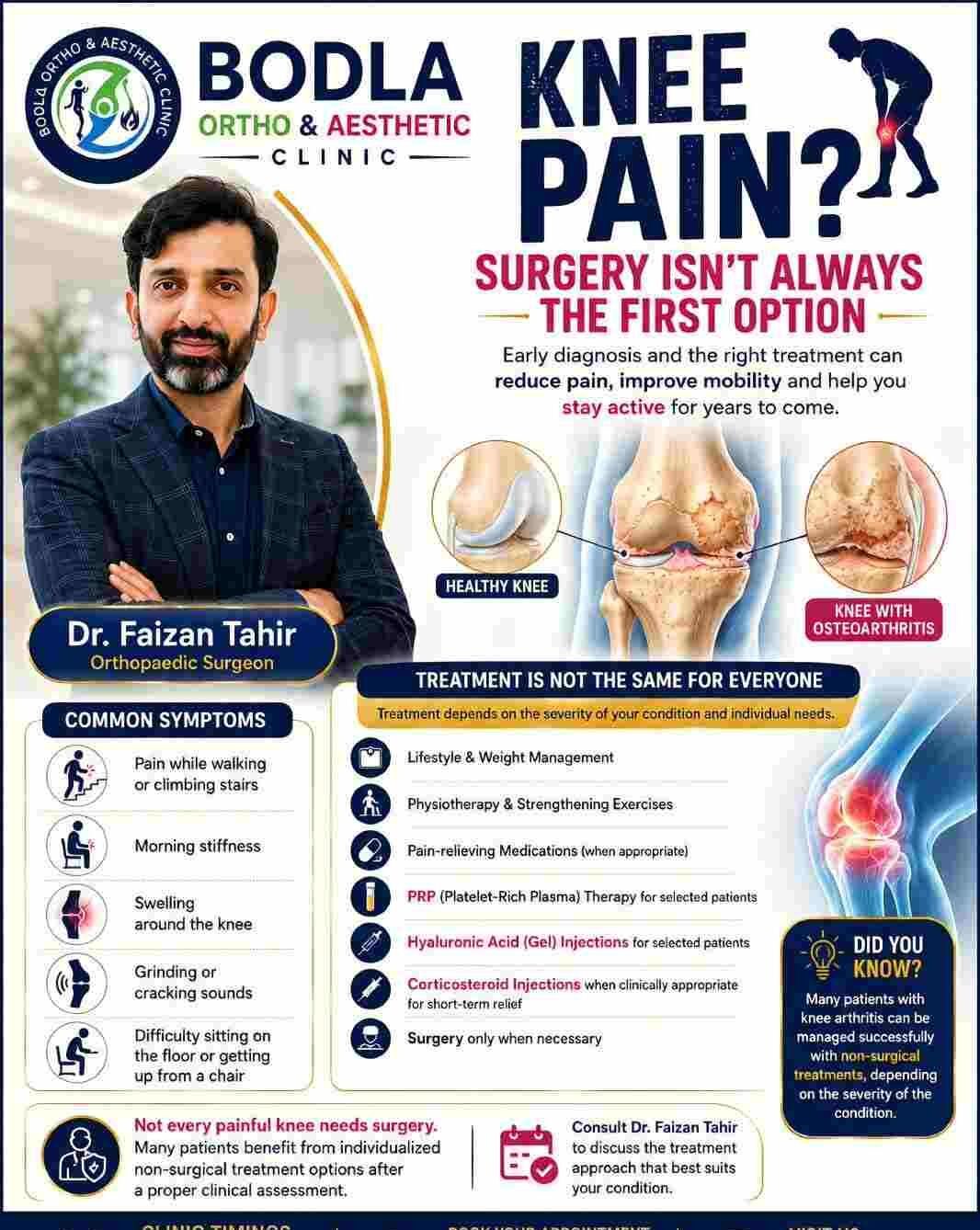
Osteoarthritis is the leading cause of knee pain in adults over 40. Symptoms include pain on stairs, swelling and stiffness after rest.
Back pain & spine problems
Slipped disc, sciatica, spinal stenosis and posture-related pain. Many cases improve with targeted physiotherapy.
Shoulder pain
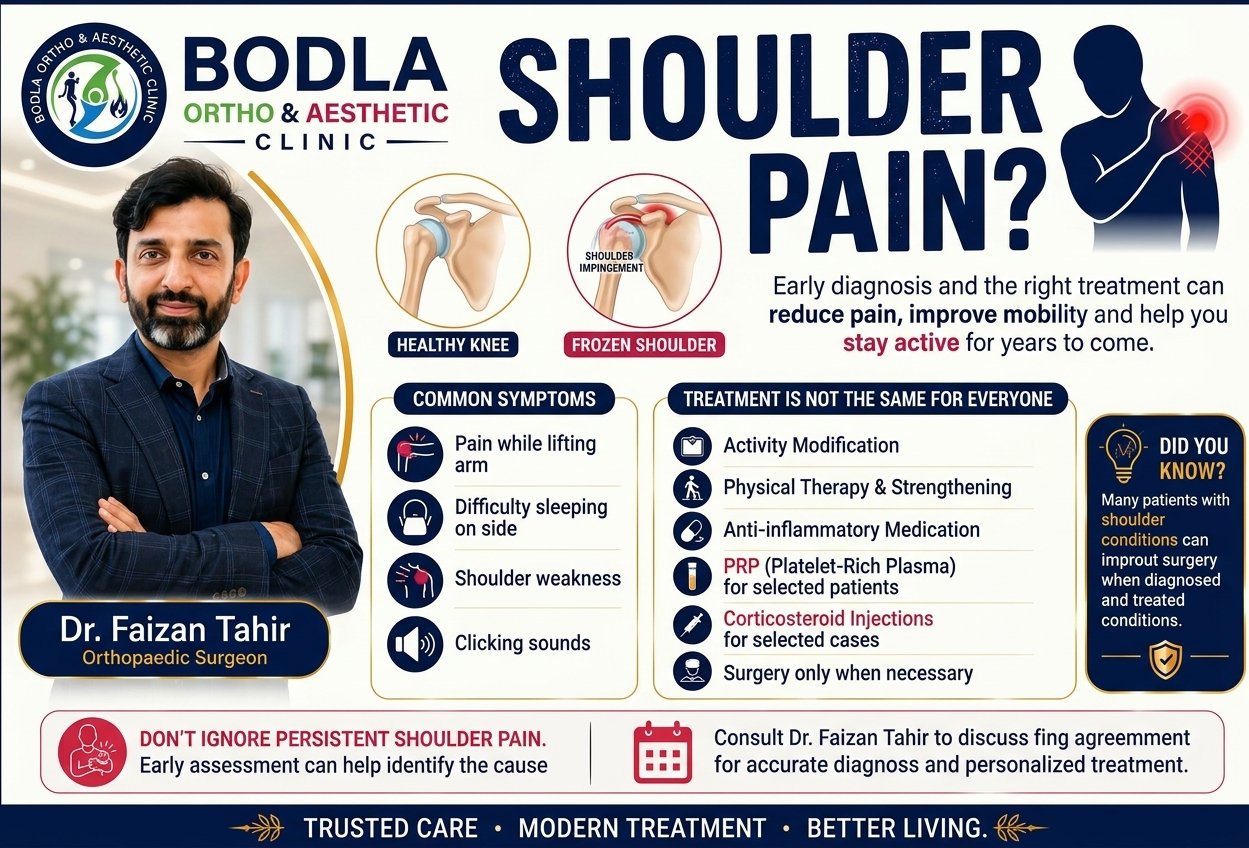
Frozen shoulder, rotator cuff tears and impingement. Frozen shoulder is more common in diabetics and people over 40.
Fractures & trauma
Casting, splinting, fixation with plates or nails, and follow-up rehabilitation for adults and children.
Sports injuries
Ligament sprains, meniscus injuries, tendon problems and tennis elbow in players and weekend athletes.
Hand & wrist
Carpal tunnel syndrome, trigger finger and wrist pain, often linked to computer, tailoring and driving work.
Hip problems
Hip arthritis, avascular necrosis and fractures, including hip replacement when needed.
Children’s bone issues
Club foot, bow legs and growth-related concerns that respond best to early treatment.
Knee pain: what most people ask
Is knee pain always arthritis?
No. Ligament injury, meniscus tears, muscle weakness, excess body weight and old injuries can all cause it. A proper examination and, if needed, an X-ray tell them apart.
Can tennis elbow happen without tennis?
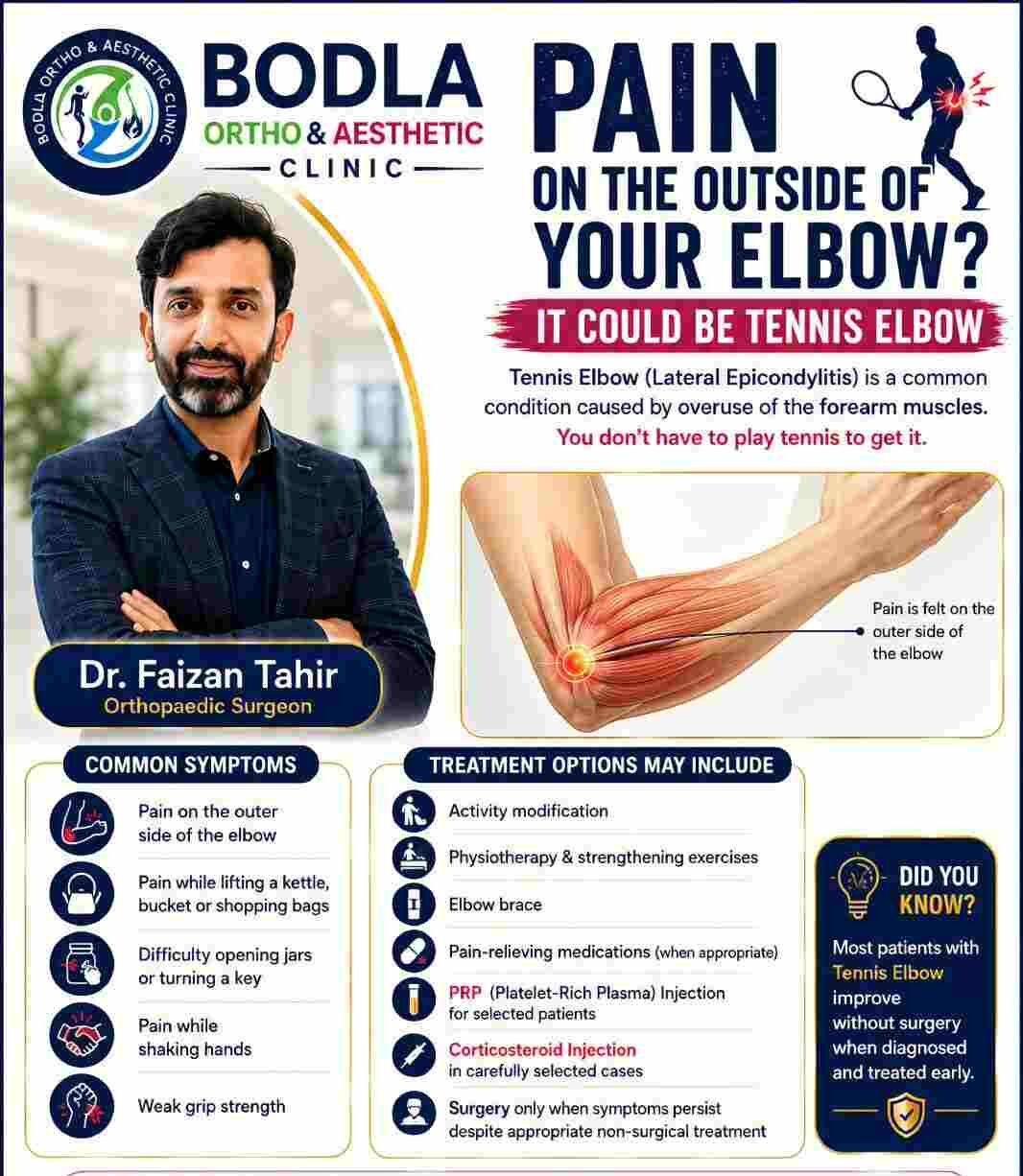
Yes. It comes from overuse of the forearm muscles, so carrying heavy bags, using tools or repeated gripping can trigger it. Most patients improve without surgery when treated early.
Non-Surgical Orthopaedic Treatments
Treatment is never the same for everyone. It depends on the diagnosis, severity, age, activity level and general health. Common options include:
- Lifestyle and weight management: every kilogram lost reduces the load on the knees.
- Physiotherapy and strengthening exercises: the foundation of recovery for knee, back and shoulder pain.
- Medicines: pain relief and anti-inflammatory drugs, used when appropriate and for the shortest useful time.
- Splints and braces: for carpal tunnel, tennis elbow and unstable joints.
- PRP (platelet-rich plasma) therapy: for selected patients with tendon problems or early arthritis.
- Hyaluronic acid (gel) injections: for selected knee arthritis patients.
- Corticosteroid injections: carefully selected cases needing short-term relief.
When Is Orthopaedic Surgery Necessary?
Surgery is considered when pain and disability continue despite proper non-surgical care, when a fracture is unstable, when nerves are being compressed, or when a joint is badly worn.
Common procedures
- Fracture fixation (plates, screws, rods)
- Knee replacement and hip replacement (joint replacement surgery)
- Ligament and meniscus repair
- Carpal tunnel release
- Spine procedures for nerve compression
Questions to ask before any surgery
- What exactly is my diagnosis, and can I see my scan?
- What non-surgical options have I tried or can still try?
- What are the risks, recovery time and expected outcome?
- What will physiotherapy involve afterwards?
A trustworthy surgeon welcomes these questions and never rushes you into an operation.
How to Choose the Best Orthopaedic Doctor in Okara
There is no official “best” ranking, so look at facts you can check yourself:
| What to check | Why it matters |
|---|---|
| Qualifications (MBBS, MS Orthopaedics) | Confirms formal surgical training |
| Registration with PMDC | Legal licence to practise in Pakistan |
| Hospital experience | Shows exposure to trauma and complex cases |
| Clear explanation and second-opinion openness | Signals honest, patient-centred care |
| Diagnostic facilities (ultrasound, X-ray access) | Faster, more accurate diagnosis |
| Timings, fees and location | Practical for follow-up visits |
About Dr. Muhammad Faizan Tahir Bodla
Dr. Muhammad Faizan Tahir Bodla is a consultant orthopaedic and spine surgeon with an MBBS, MS in Orthopaedic Surgery and an MSc in Pain Medicine. He is a former registrar at the Bone & Joint Services Hospital, Lahore, and a member of the Irish Medical Council. His clinic focuses on fractures, joint pain, arthritis, sports injuries, spine problems and joint replacement, with a preference for the least invasive option that works.
Read more on the Our Doctors page or explore all clinic facilities.
What to Expect at Your First Visit
- History: when the pain began, what worsens it, past injuries, diabetes and medicines.
- Physical examination: movement, strength, swelling and nerve tests.
- Investigations if needed: X-ray, ultrasound or MRI, not for every patient.
- Diagnosis and plan: explained in simple language, with non-surgical options first.
- Follow-up: exercises, review dates and warning signs to watch for.
What to bring
- Previous X-rays, MRI reports and prescriptions
- A list of current medicines and allergies
- Comfortable clothing that lets the doctor examine the joint
Consultation fees are listed on the price list. At the time of writing, the orthopaedic and spine consultation is listed at Rs. 1,000, but please confirm current fees when booking.
Practical Tips to Protect Your Bones and Joints
- Move daily: walking, swimming or cycling for 30 minutes keeps joints lubricated.
- Strengthen your thighs and core: strong muscles take pressure off knees and spine.
- Watch your weight: extra kilos strain knees, hips and lower back.
- Fix your desk posture: screen at eye level, feet flat, short breaks every 45 minutes.
- Get calcium and vitamin D: dairy, eggs, leafy greens and safe morning sunlight. Ask your doctor before taking supplements.
- Lift smart: bend the knees, keep the load close, avoid twisting.
- Control diabetes: high sugar raises the risk of frozen shoulder and carpal tunnel.
- Do not self-medicate: repeated painkillers and unsupervised steroid injections can hide or worsen the problem.
More advice is available in our health tips section, and you can browse every orthopaedic service we offer.
Frequently Asked Questions
Who is the best orthopaedic doctor in Okara?
The best doctor is the one with verified qualifications, relevant surgical experience and a clear, honest approach. Compare registration, hospital background, patient communication and facilities. Dr. Muhammad Faizan Tahir Bodla at Bodla Ortho & Aesthetic Clinic holds an MS in Orthopaedic Surgery and consults at Tanki Chowk, Govt Colony, Okara.
What does an orthopaedic doctor treat?
Bone, joint, ligament, tendon, muscle and spine problems: fractures, arthritis, knee and shoulder pain, back pain, sports injuries, hand and wrist conditions, and children’s bone disorders.
Do all knee pain patients need knee replacement?
No. Most patients start with exercise, weight control, medicines and, in selected cases, PRP or gel injections. Replacement is reserved for advanced arthritis that no longer responds to other treatment.
What are the clinic timings in Okara?
Monday to Saturday, 2:00 PM to 9:00 PM, and Sunday, 2:00 PM to 7:00 PM. Walk-ins and appointments are both welcome.
When should back pain be checked by a specialist?
See a specialist if back pain lasts over two weeks, spreads to the leg, follows an injury or comes with numbness or weakness. Urgent care is needed if there is loss of bladder or bowel control.
Conclusion
Seeing an orthopaedic doctor in Okara early can be the difference between simple treatment and a long-term problem. Most bone and joint conditions improve with an accurate diagnosis, physiotherapy and the right medical care, and surgery is only needed for a smaller group of patients.
Choose a specialist who is qualified, explains options clearly and puts non-surgical care first. Keep your joints strong through movement, healthy weight and good posture, and do not ignore pain that lasts.
Book Your Orthopaedic Consultation
Bodla Ortho & Aesthetic Clinic
Tanki Chowk, Govt Colony, Okara (near Al-Jamal Marriage Hall)
Mon–Sat 2:00 PM–9:00 PM · Sunday 2:00 PM–7:00 PM
Also visit: Aesthetic Services · Home
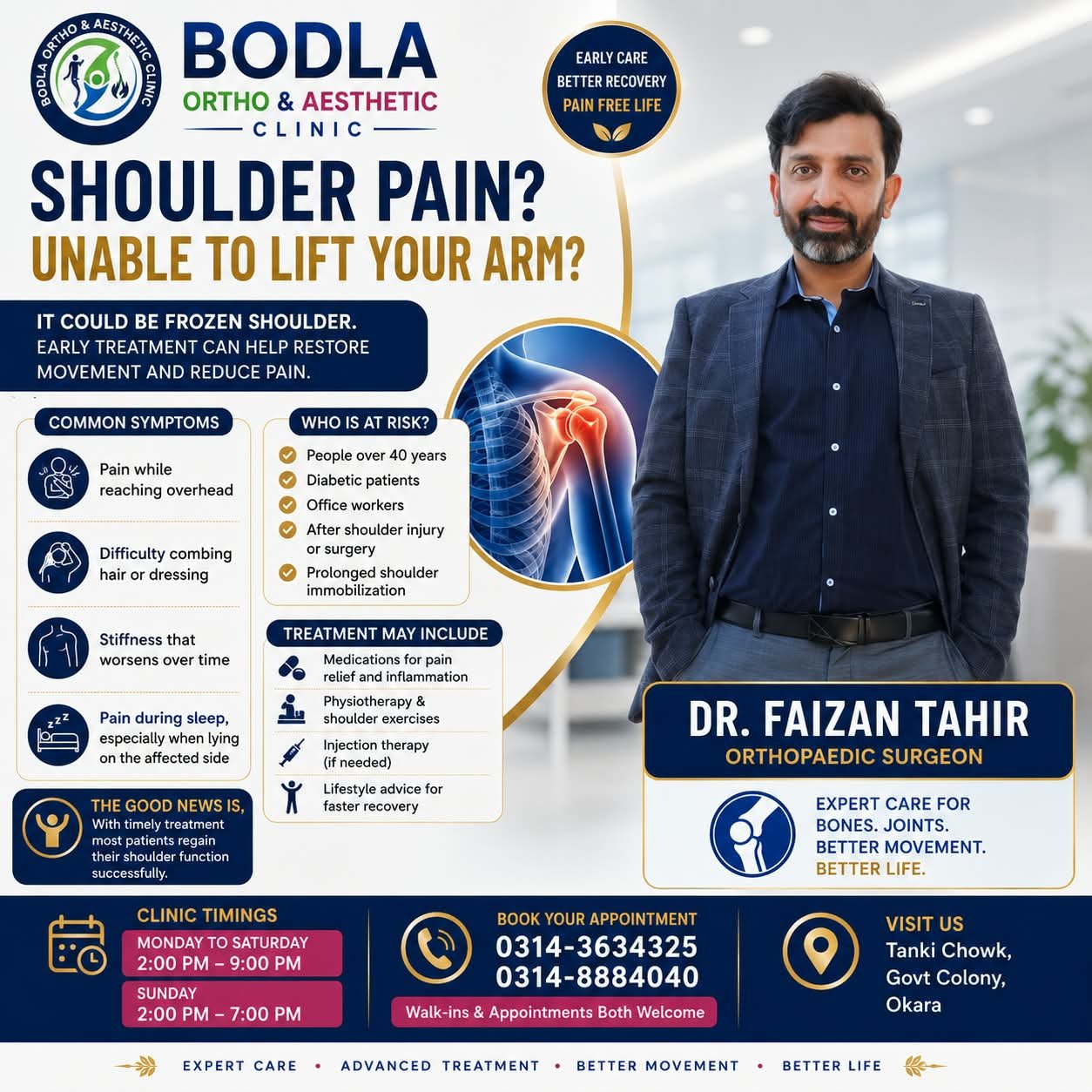
Advanced non-surgical & surgical treatments for shoulder stiffness and joint relief.
Non-surgical knee pain management, arthritis relief, and joint preservation.
Advanced therapies including PRP and injections for fast elbow pain relief.
Move Without Pain
Get expert guidance for fractures, joint pain, spine problems, sports injuries, and lasting mobility.